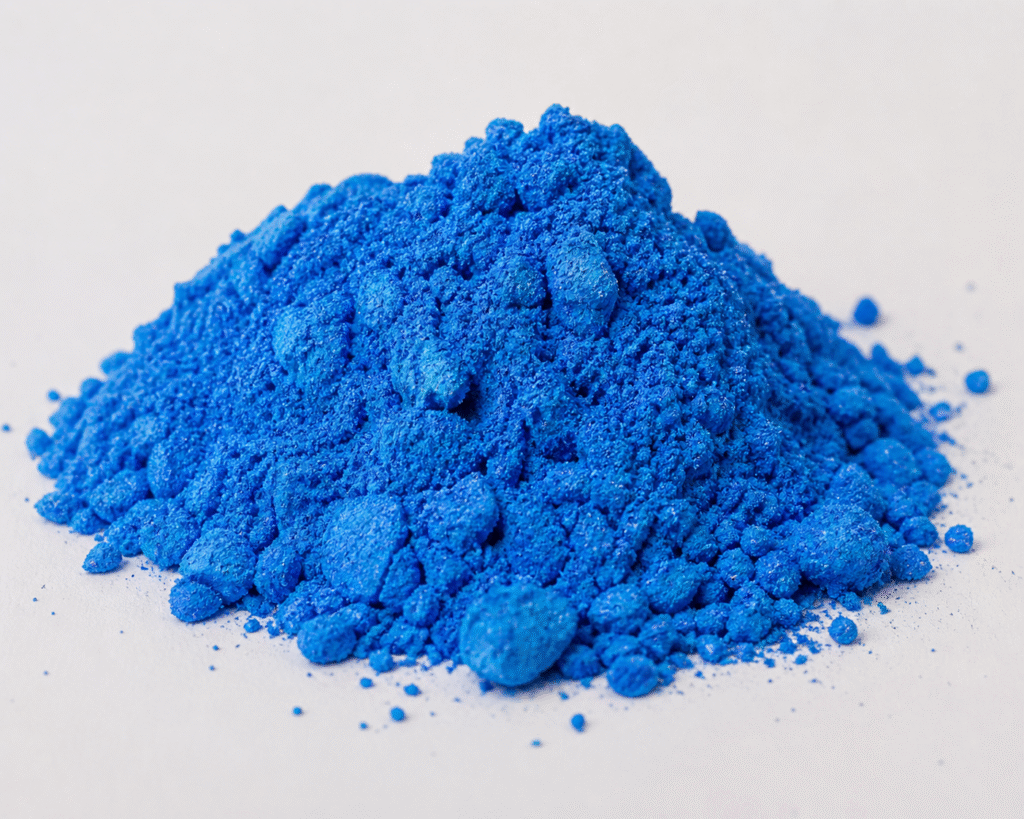
What is Tyrian Purple?
Tyrian purple, also known as royal purple, or imperial purple, was one of the most prestigious and desired pigments known in the ancient Mediterranean world. Although the recipe is currently unknown to the modern world, there are many attempts to recreate this mysterious pigment.
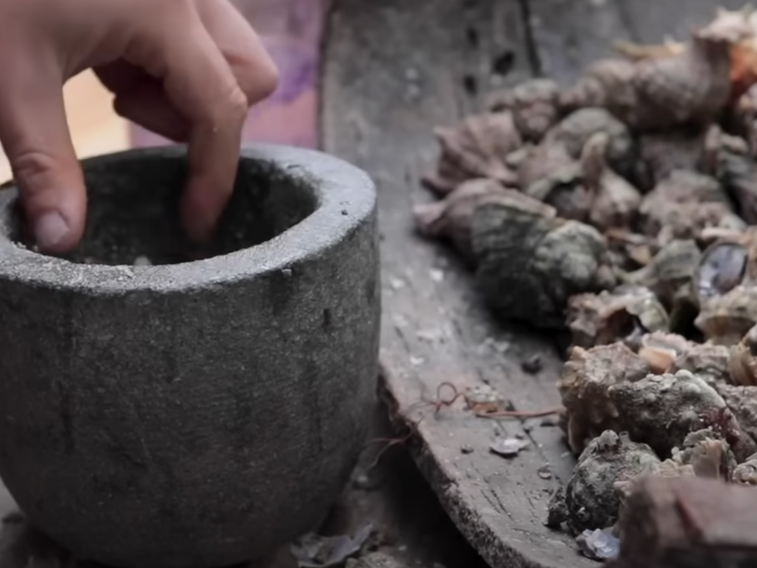
Desired for its remarkable, vibrant, weather-resistant beauty, this lost ancient pigment was extracted from the desiccated glands of 3 species of predatory murex snails that lived in the ancient Phoenician port city of Tyre. No wonder this noble dye, adored by ancient civilisations throughout Southern Europe, North Africa, and Western Asia, is linked to the very name “Phoenicia,” believed to mean “land of purple,” with Tyre as its main production centre.
Different Shades of purple
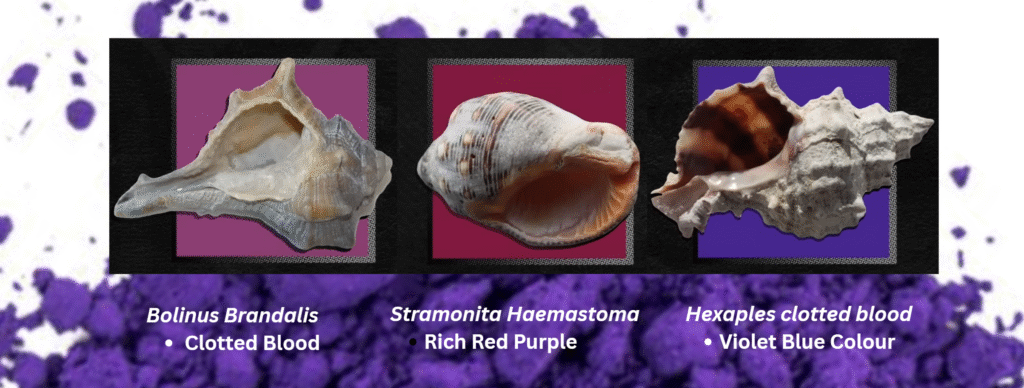
Purple in antiquity covered a wide colour spectrum, not a single hue. Each species of the mentioned sea snails contributes to producing a different colour: Hexaplex trunculus (bluish purple), Bolinus brandaris (reddish purple), and Stramonita haemastoma (red). There is a particular hue that ancient authors raved about that was worthy of the name: a deep reddish-purple, like that of coagulated blood, tinged with black.
Pliny the Elder described such materials as having a “shining appearance when held up to the light.” Tyrian purple achieved this effect through a combination of chemistry and physics. The dye molecules reflected light at slightly different angles, producing a subtle metallic or glossy sheen. The dibapha (double-dyeing) method layered pigments onto the fibres, deepening the colour and enhancing light scattering.
Together, the dye’s chemical structure, its bond with the fibres, and the double-dyeing process created a colour that was not only rich but also lustrous—a natural luxury effect.
The Mythical Discovery of Purple
The production of Tyrian purple goes back at least 3500 years, and Greek legends tell us it was discovered by Hercules, who, on seeing his dog’s purple-stained mouth, realised the colour came from the snail the dog had just chewed. Each snail yielded just one drop of dye.
Why Tyrian Purple Was More Valuable Than Gold
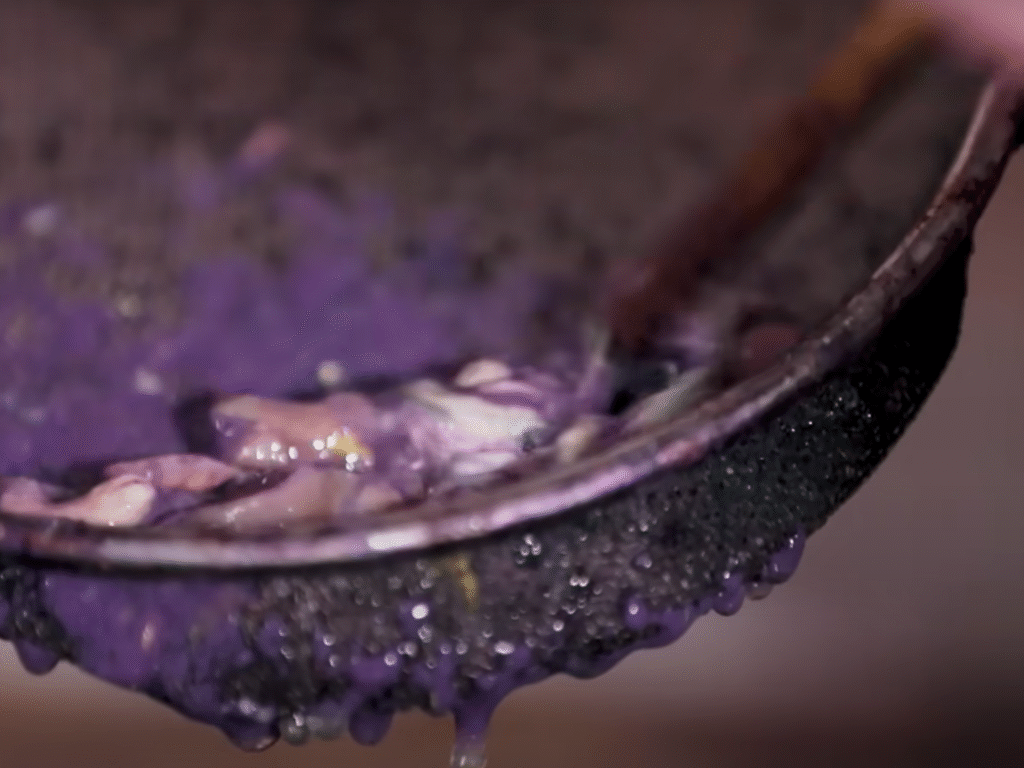
A Single ounce of this required the sacrifice of around 250,000 snails, so it is no wonder that this rare hue has been one of the most coveted and expensive colours throughout history—a consistent indicator of wealth and power. Production was labor-intensive, smelly, and technically complex.
Purple in Ancient Royalty and Religion
In Roman times, on pain of death, only the Emperor could wear an entire purple toga. Queen Cleopatra of Egypt recognised the colour’s seductive qualities and had the perfumed sails of her royal barge dyed purple, inspiring Julius Caesar to establish the colour in Rome. Later, in Rome and Byzantium, purple clothing was reserved not only for emperors but also for high-ranking officials and clergy.
However, not only the Phoenicians knew about these precious snails. Murex snails may also have been the historic source of “tekhelet” – a sacred colour in the Jewish tradition mentioned in the Hebrew Bible (Credit: Mohammed Ghassen Nouira).The Murex snails that produced Tyrian purple may also have been the historic source of tekhelet, the sacred blue dye mentioned in the Hebrew Bible. Tekhelet was commanded by God to be used in the tassels (tzitzit) on the corners of garments (Numbers 15:38–39), and it was also associated with the priestly garments and the Tabernacle.
The Lost Secret of Tyrian Purple
The method of preparing Tyrian purple was lost to Western civilisation after the fall of Constantinople during the Crusades of 1204. It wasn’t rediscovered until 1998. Thought the Mediterranean molluscs were driven toward extinction, the ancient Aztecs Sustainably “milked” their sea snails, returning them to the waters, so a natural purple dye still exists today in Mexico.
Scholars and religious communities have identified the Murex trunculus snail as the likely source of tekhelet. In fact, in the late 20th century, Jewish researchers and dye experts revived the process, and today, tekhelet-dyed tzitzit are once again produced, reconnecting modern Judaism with an ancient biblical tradition.
Tyrian Purple: Exclusive Use in Textiles, Not Paintings
While Tyrian purple was primarily used for textiles, the same chemical properties could also colour wool, silk, and other fibres used in tapestries or wall hangings. However, it was rarely applied directly to walls or paintings in antiquity because the dye is water-soluble and sensitive to light and air; it would fade or run if used like a paint. Instead, pigments derived from murex (sometimes processed differently) could be mixed with binders for wall painting or decorative objects, but the most famous and enduring applications remained fabrics worn or displayed by elites.
Modern Rediscovery and Legacy
Modern experiments have helped us better understand the remarkable Tyrian purple. Scientists have discovered that its rich, long-lasting color comes from brominated indigo compounds, and that exposure to sunlight during the dyeing process made it even more brilliant. The technique was so effective that Tyrian purple recovered from the royal tombs of Qatna—over three thousand years old—still glows with intense color, a testament to the skill of ancient dyers.
The final shade of purple depended on many factors: the species of murex snail, the time of harvest, the snail’s sex, freshness, UV exposure, oxygen, and even traditional additives like urine and honey. Wool absorbed the dye most deeply, creating the famous “blood-like” purple, while silk produced softer, bluish tones.
Interestingly, urine played a key role in the dyeing process. Its chemical properties helped the dye soak into the fibres and develop deep, rich colours, and it acted as a fixative, making the colour last for centuries. That’s why we can still see Tyrian purple on ancient fabrics today.
Renesans Intensewater watercolours
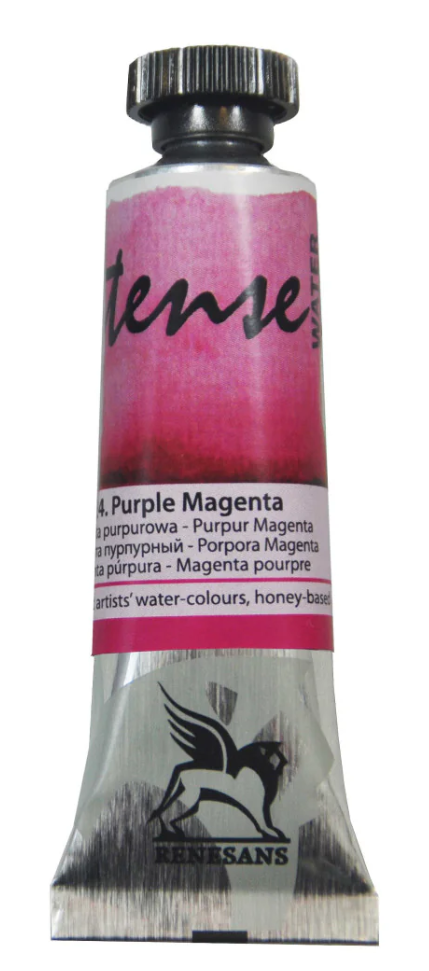
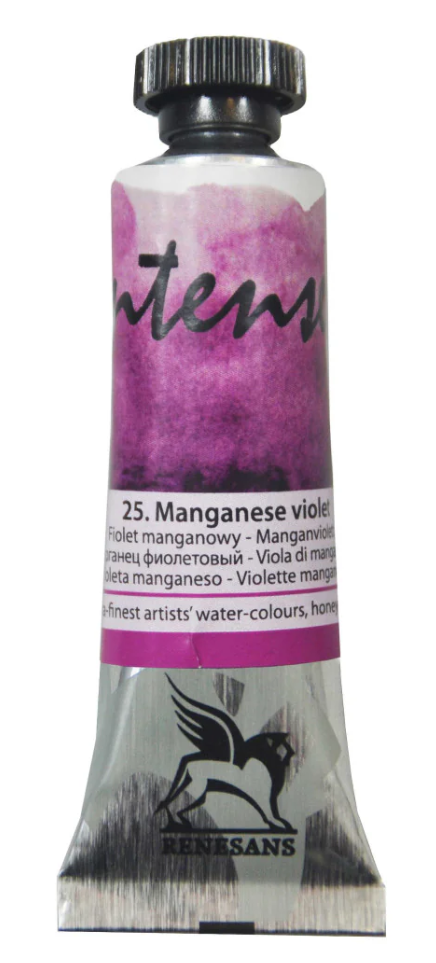
Though the exact recipe for Tyrian purple has been lost to time, its magic still inspires us today. In my shop, you’ll find three beautiful watercolour shades—24 Purple Magenta, 25 Manganese Violet, and 27 Mineral Violet—each crafted with excellent lightfastness and rich, vibrant character. They are fully compatible and mix beautifully together, opening up a whole spectrum of purples reminiscent of the ancient dye once reserved for royalty.
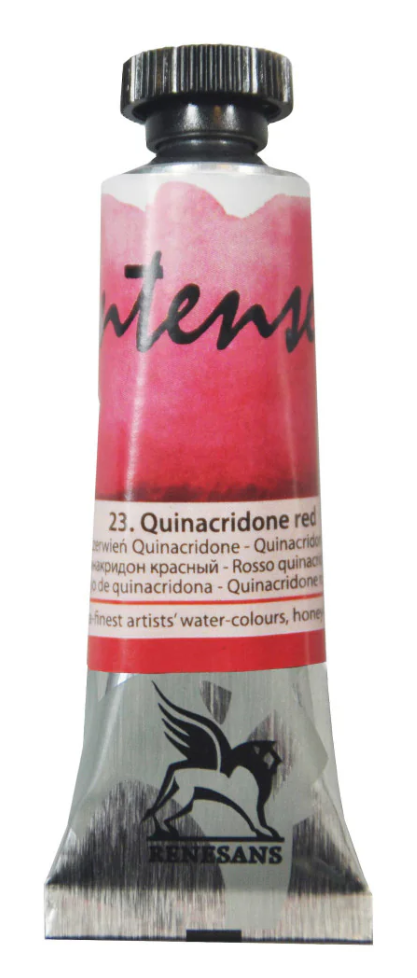
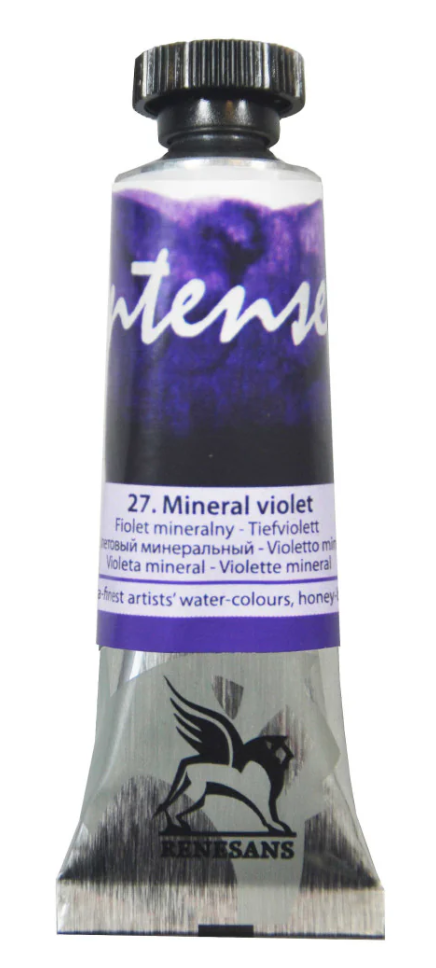
You can even add 23 Quinacridone Red for intense rose-red hues, expanding your palette further. After all, there was never just one Tyrian purple—its beauty lay in its variations. I’d love for you to explore these affordable colours and see how they can add a touch of history, depth, and brilliance to your own painting journey.